







If your body weight is coming down but certain areas still look unchanged, you’re not imagining things.
This is one of the most common frustrations people experience during fat loss. The scale improves, clothes fit better, strength goes up — yet fat seems to linger in places like the lower abdomen, hips, thighs, or sides of the waist.
Those areas almost always respond last. Even when overall progress is happening, they tend to be stubborn.
This doesn’t mean your plan isn’t working.
It means your body is following its natural order.
Why Some Fat Disappears Faster Than Other Fat
Not all body fat behaves the same way. Certain fat cells are biologically more resistant to releasing stored energy. These cells contain a higher concentration of receptors known as alpha-2 receptors, which slow the fat-release process.
When your body needs energy, it pulls from the most accessible sources first. Areas with fewer of these receptors give up stored fat more easily, which is why changes often show up sooner in the face, arms, chest, or upper body.
Fat stored in the lower stomach, hips, and thighs is simply harder for the body to access. It’s not protected because you’re doing something wrong — it’s protected because of how those cells are wired.
That uneven pattern can make progress feel discouraging, even though your body is still moving in the right direction.
This isn’t a willpower issue.
It’s physiology.
What Actually Works for Stubborn Fat
Despite how frustrating stubborn fat can be, it does not require special protocols, extreme measures, or secret tricks. It still responds to the same rules as all other body fat.
There are only two factors that truly matter.
1. A Real, Sustainable Calorie Deficit
Fat loss begins when your body consistently needs to use stored energy. That signal comes from eating fewer calories than you burn.
For many people, a practical starting point is reducing intake by about 20 to 25 percent below daily energy needs.
If someone burns around 2,500 calories per day, that may place intake closer to 1,900 to 2,000 calories. Precision matters far less than consistency. The deficit should be noticeable enough to produce progress, but manageable enough to maintain.
Extreme restriction is unnecessary and often counterproductive.
2. Staying the Course Long Enough
Time is the variable most people underestimate.
Think of body fat like a storage room. The items closest to the door are used first. The ones tucked into corners or stacked in the back take longer to reach.
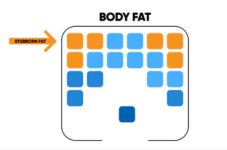
Stubborn fat exists in those deeper storage areas. Your body doesn’t access it until easier energy sources are already depleted. That’s why these areas resist change until later in the process.
Patience isn’t optional here — it’s part of the system.
Why Targeting Specific Areas Doesn’t Work
It would be convenient if exercises, tools, or supplements could dictate where fat comes off first. Unfortunately, the body doesn’t operate that way.
No movement, product, or technique can force fat loss from a specific location. Fat reduction happens globally, not locally. Stubborn areas only lean out after total body fat continues to decrease.
There is no shortcut around this process.
What to Pay Attention to Instead
Rather than fixating on one problem area, shift focus to behaviors you can repeat week after week:
Maintaining a consistent calorie deficit
Eating balanced meals that support training and energy
Strength training and regular movement
Tracking progress beyond just appearance
Photos, measurements, performance improvements, and how clothes fit often reveal progress long before stubborn areas change visibly.
The Reality of Long-Term Fat Loss
Stubborn fat is often the final stage of progress, not a sign of failure. When those areas resist change, it usually means your body is working through its remaining reserves.
Meaningful fat loss happens gradually. The people who succeed aren’t the ones chasing shortcuts — they’re the ones who stay consistent long enough for biology to catch up.
Trust the process, keep showing up, and give your body the time it needs to finish the job.
This is one of the most common frustrations people experience during fat loss. The scale improves, clothes fit better, strength goes up — yet fat seems to linger in places like the lower abdomen, hips, thighs, or sides of the waist.
Those areas almost always respond last. Even when overall progress is happening, they tend to be stubborn.
This doesn’t mean your plan isn’t working.
It means your body is following its natural order.
Why Some Fat Disappears Faster Than Other Fat
Not all body fat behaves the same way. Certain fat cells are biologically more resistant to releasing stored energy. These cells contain a higher concentration of receptors known as alpha-2 receptors, which slow the fat-release process.
When your body needs energy, it pulls from the most accessible sources first. Areas with fewer of these receptors give up stored fat more easily, which is why changes often show up sooner in the face, arms, chest, or upper body.
Fat stored in the lower stomach, hips, and thighs is simply harder for the body to access. It’s not protected because you’re doing something wrong — it’s protected because of how those cells are wired.
That uneven pattern can make progress feel discouraging, even though your body is still moving in the right direction.
This isn’t a willpower issue.
It’s physiology.
What Actually Works for Stubborn Fat
Despite how frustrating stubborn fat can be, it does not require special protocols, extreme measures, or secret tricks. It still responds to the same rules as all other body fat.
There are only two factors that truly matter.
1. A Real, Sustainable Calorie Deficit
Fat loss begins when your body consistently needs to use stored energy. That signal comes from eating fewer calories than you burn.
For many people, a practical starting point is reducing intake by about 20 to 25 percent below daily energy needs.
If someone burns around 2,500 calories per day, that may place intake closer to 1,900 to 2,000 calories. Precision matters far less than consistency. The deficit should be noticeable enough to produce progress, but manageable enough to maintain.
Extreme restriction is unnecessary and often counterproductive.
2. Staying the Course Long Enough
Time is the variable most people underestimate.
Think of body fat like a storage room. The items closest to the door are used first. The ones tucked into corners or stacked in the back take longer to reach.
Stubborn fat exists in those deeper storage areas. Your body doesn’t access it until easier energy sources are already depleted. That’s why these areas resist change until later in the process.
Patience isn’t optional here — it’s part of the system.
Why Targeting Specific Areas Doesn’t Work
It would be convenient if exercises, tools, or supplements could dictate where fat comes off first. Unfortunately, the body doesn’t operate that way.
No movement, product, or technique can force fat loss from a specific location. Fat reduction happens globally, not locally. Stubborn areas only lean out after total body fat continues to decrease.
There is no shortcut around this process.
What to Pay Attention to Instead
Rather than fixating on one problem area, shift focus to behaviors you can repeat week after week:
Maintaining a consistent calorie deficit
Eating balanced meals that support training and energy
Strength training and regular movement
Tracking progress beyond just appearance
Photos, measurements, performance improvements, and how clothes fit often reveal progress long before stubborn areas change visibly.
The Reality of Long-Term Fat Loss
Stubborn fat is often the final stage of progress, not a sign of failure. When those areas resist change, it usually means your body is working through its remaining reserves.
Meaningful fat loss happens gradually. The people who succeed aren’t the ones chasing shortcuts — they’re the ones who stay consistent long enough for biology to catch up.
Trust the process, keep showing up, and give your body the time it needs to finish the job.